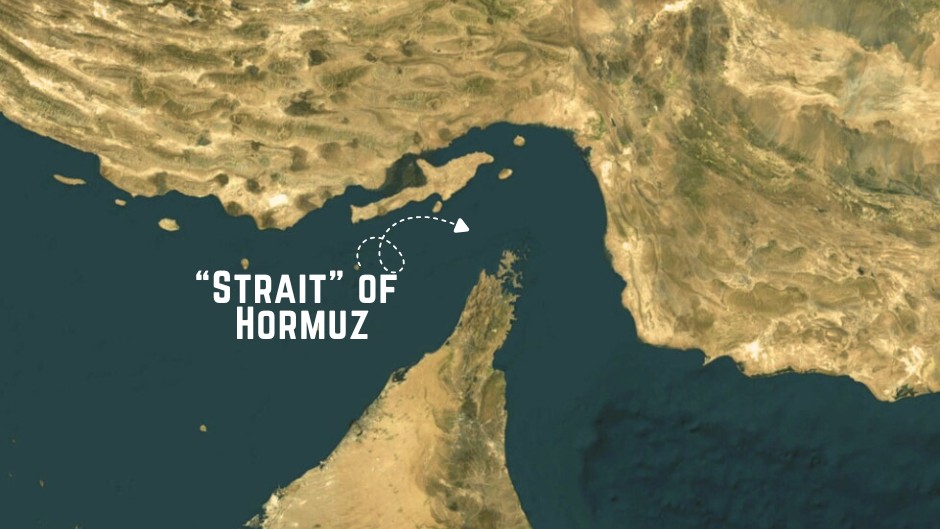
The body of water, 38 miles wide at its narrowest point, says it has been doing some thinking a lot lately.
The back and forth between the United States of America, chiefly represented by the Commander in Chief there, Donald Trump, and the middle East wild child, Iran, whose representative's name this news agency was not able to pronounce, nor did it care to learn, has dominated news headlines. But sources close to the Strait of Hormuz say the Strait itself, long presumed to be straight, is no longer sure.
"It's been a very confusing few months," the Strait told MCM, in an exclusive interview conducted via buoy and life preserver. "Everyone keeps yelling about me. Nobody has actually asked me how I'm doing, or how I feel."
The Strait, which has connected the Persian Gulf to the Gulf of Oman since approximately the Pliocene Epoch, said the geopolitical attention has given it space to reflect. "I've been a Strait my whole life. And, I mean, I've been called straight. I never picked the name." It paused. "When you really sit with it, what does that even mean for a body of water like me?"
Meanwhile, the conflict, which has seen both sides spewing hilarious rhetoric and terrifying threats, has sent gas prices skyrocketing to a staggering 4.89 a gallon in metro Detroit, and your broke-ass coworker to resort to riding his bike into work every morning—because who can afford both the gas prices and their health insurance copay for a herniated disc?
Trump, asked about the development at a press conference Tuesday, said the Strait had "always seemed a little fruity" to him personally, and that America had the "best straits. Frankly, much better straits," though he did not specify which straits he was referring to.
The Iranian representative (who may or may not be the same guy as last week, we really aren't sure) was more measured in his statements, reading in part, "We respect the Straits process. We have always had a complicated relationship with it, but that is between us and the Strait."
The Bosphorus, reached for comment, said it was "honored" the Strait had felt comfortable enough to share, and offered to talk anytime. The Panama Canal, famously bi-directional, declined to comment, but was described as "extremely supportive in private" by sources. The English Channel did not return any calls.
The Strait said it was not yet ready to label itself. "I might be gay. I might be something else. I might just be a strait, you know? A geological feature with a lot going on." It added that it would appreciate, if at all possible, a few weeks where no one left mines in it.
At press time, oil tankers continued to pass through the strait at a rate of roughly twenty-one million barrels per day, each one, the Strait noted softly, "just kind of going through me without even asking." Despite the intrusion, the strait has kept its spirits alive, reportedly reading Maggie Nelson and exploring alternative interests that it felt obligated to ignore in the past.